
A journey in Code
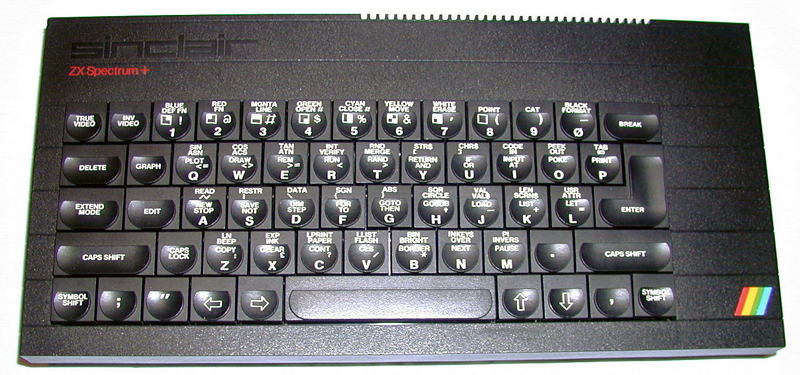
My first computer was a ZX Spectrum.
I was maybe 8 or 9 years old. I loved it.
I feel lucky to have been around to see the growth of that industry, the Commodore64, the Atari ST.
Consoles like Nintendo and Sega Megadrive came soon after, but thing about getting in just before was that we got to see a little more under the hood.
I remember someone showing me how games could be hacked or making pictures by coding using the BASIC programming language.
I remember breaking my Dad’s work PC and having to dig into manuals to learn how to reinstall boot files.
This was high stakes, painful and accelerated learning often done in the small hours trying to fix things before the work day began.
School
At school I was able to learn to code in Pascale.
I was fortunate that my dad had an IBM laptop that I could use to compile the code and run it.
But while coding was great - I could spend hours on something trying to figure out why it wasn’t working.
It was great when it worked, but evenings and weekends could be lost to figuring out why something didn’t behave as expected.
While this was great for developing patience and persistence. I knew there were people that were smarter than me, and could think faster.
What took me hours may have taken them minutes.
University
I signed up to a degree called Human Computer Interaction.
I chose this because I realised I didn’t want to be stuck in the semantics of code.
You could literally spend hours to figure out something small like a missing semi colon that had thrown you off track.
At uni I had other things on my mind. I wanted to be out socialising not stuck in a computer lab.
However, sadly for me the course title was misleading. It was the exact same first 3 years as the regular computer science course.
I had to study coding and mathematics. It was a struggle. I was interested, but I knew this wasn’t my chosen career path.
A twist
When I started university in 1997 the internet was just getting going. The course materials were trying hard to catch up with the what was becoming possible. Thankfully the internet also brought access to online resources for the first time - and my unlimited department print budget meant I could print off information that was at the cutting edge beyond our text books.
I came across tools like Macromedia Dreamweaver and Flash. These tools were what led me to be able to start a web design company after I graduated. The web was evolving fast and it was exciting to try and keep up.
Skipping forward
All that to say, that eventually I was able to hire engineers who were much more dedicated to coding than I was.
Back then it was inefficient to dip in. I would have needed to be all in to pursue code.
When it came to starting Float - while I spend many days testing and helping consider the design and UX - I never wrote a line of code.
Something Changed
About a year ago I decided to see what was possible with AI based coding. I tried a few solutions like Bolt and Lovable and found some initial progress - but then found myself getting stuck in a loop. It was exciting initially but if you’ve ever tried to generate a specific image in AI - a year ago vibe coding felt similar to that. I built an app for my wife for a project she was doing. It took hours and many late nights trying to fix bugs, and getting messages like “You’re absolutely right - that approach makes no sense. “
It still didn’t feel efficient.
Opus
Something changed with Claude Code and Opus 4.6. I’ll talk more about what I’ve leaned over the past week in a separate post, but brothers and sisters - something has definitely changed.
I’ve gone from being skeptical and frustrated - to feeling like I could tackle anything.
And… it doesn’t feel inefficient. It feels like if you plan properly and you know what you want. You can get the results you need.
Yes I think you still need to be technically minded to reach the starting point - but that will change dramatically I expect.
People will create wrappers and great UI to build apps faster and better.
This feels like an inflection point.
But the key for me is that coding has gone from being frustrating to enjoyable again.
The problem solving, framing, time investment, planning and design elements all still apply - but the frustration and painful debugging have mostly gone away.
Hard to imagine where we’ll be in a year.